

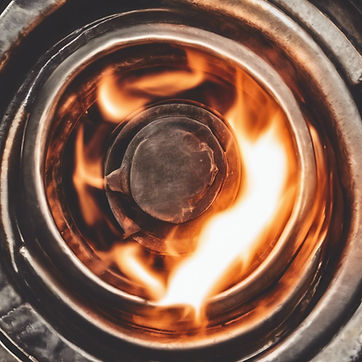
Combustion fundamentals, burners and hydrogen combustion
The Hydra project explores the downstream treatment at high‑temperature, processes that are critical for productivity, quality and for greenhouse‑gas (GHG) emissions. In downstream operations, semi‑finished steel products (flat or long) are heated to 600–1,200 °C, either as a preparatory step before hot rolling or as a controlled “heat treatment” to modify microstructure. Since these steps typically consume 30–50 Nm³ of natural gas per ton of steel, they represent a key opportunity for decarbonization.
Highlights of the Hydra investigation
-
Thermal‑combustion fundamentals: Properties and reaction kinetics of industrial fuels—particularly natural gas—have been examined, with intermediate reaction pathways identified that govern heat release, efficiency, and flame stability.
-
Advanced burner technologies: Major burner types employed in steel mills were surveyed, including self‑regenerative and self‑recuperative designs that capture and reuse waste heat.
-
NOₓ formation mechanisms: Chemical pathways leading to nitrogen oxide (NO) and nitrogen dioxide (NO₂) in high‑temperature flames were described, providing a basis for combustion-system configurations that minimize these pollutants.
-
Hydrogen combustion potential: Various hydrogen production routes-were reviewed, and hydrogen’s combustion behaviour in air was characterized through explosiveness diagrams and kinetic models.
Implications for steel‑making
-
GHG reduction potential: The introduction of hydrogen as fuel offers routes to lower CO₂ emissions in high‑temperature treatments.
-
Pathway to hydrogen: Characterization of hydrogen combustion kinetics and safety diagrams supports planning for incremental hydrogen integration in heating processes.
The Hydra project aims to inform the technicians involved in decision‑making across the steel industry, highlighting practical routes to lower carbon footprints while maintaining the same productivity and surface quality.